Hiroshi Hara, translated by The Japan Story Project Team
Lesson 1: Every Possible Part
Stand apart.
This is a lesson from the dispersed villages of Central and South America.
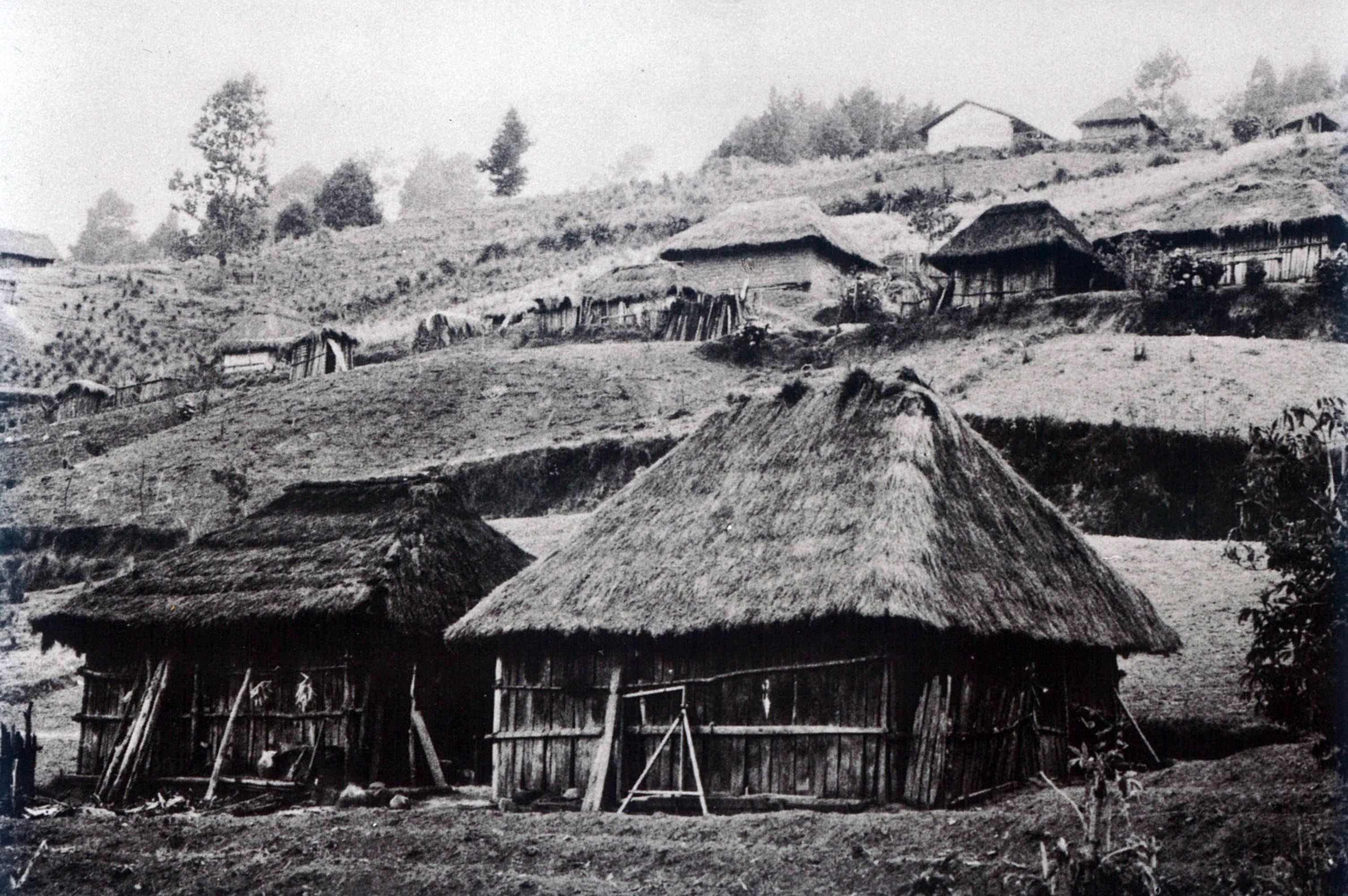
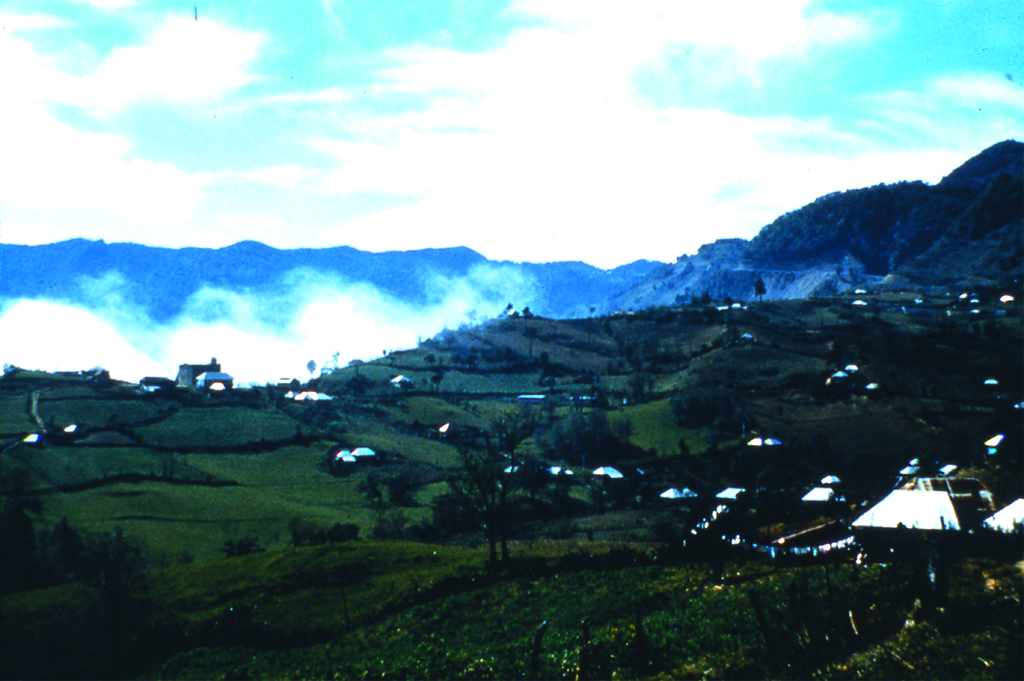
In Latin America, much of the land is poor for farming, often forcing farmers to leave fields fallow. Within such agricultural landscapes, one finds villages where homes are scattered—close enough for residents to communicate by voice or facial expressions, yet distant enough to stand apart. These are what I call “discrete villages.” This landscape of such fallow-field villages has a unique character, suggesting a particular way of existing within a community: standing apart.
To explain metaphorically: within an ordinary spatial field, a single point cannot be isolated completely on its own. Attempting to isolate a point inevitably draws surrounding points along with it. If we take the point as a metaphor for a person, we might say that in a community with the ordinary field formation, the bonds between people are inescapable, even fated. In contrast, within a richer, discrete space, a point can be isolated by itself, and simultaneously extracted together with its neighbors. In this space, every subset can be counted as a meaningful part. If each point represents a person, then this community is a collection of people who are both independent and interconnected. In other words, it is a community in which both the collective and the individual are equally meaningful.
The word “community,” like “settlement,” may sound somewhat old-fashioned today. Many traditional communities have already disintegrated or are in the process of doing so, and new forms of human relationships are being sought. As the lessons of villages suggest, this is not about recreating ancient settlements in the present but about discovering new interpretations and new vocabularies.
The teaching "stand apart" does not necessarily refer only to human existence. Originally, as shown by the dwelling arrangements of discrete villages, it is a lesson about the existence of things. Just as dispersed dwellings in fallow fields evoke meanings of autonomy and coexistence, we too must prepare conditions in which meaning can arise between newly arranged, separated things.
The photograph represents a case study of discrete villages in Central and South America.
Malila, Mexico. Photographed during a village survey in 1974; some villages documented no longer exist. © Hara Lab, Institute of Industrial Science, The University of Tokyo.
The text and accompanying images were originally published in One Hundred Lessons from Villages (Shokokusha, 1998) by Hiroshi Hara. The translation and publication on JapanStory.org was made possible with permission from Atelier Φ and the publisher of the original work, Shokokusha Publishing Co., Ltd.